0:00–4:00
Cosmogony
Darkness, tension, noise, matter before form. A beginning without a witness: space not yet narrated, energy only beginning to gather before the explosion.
A musical journey through the history of existence.
From cosmic chaos, through the formation of the Earth, the birth of life and consciousness, to culture, ritual, and a contemporary vocal piece. Gondwana is a musical and visual meditation on matter, time, memory, and trace.
The community of matter, the memory of time
We do not begin with a state, a map, a language or a flag. We do not begin with ideology, the market, an algorithm or digital noise. Before human beings learned to separate themselves from one another by name, territory, religion, skin colour, class, language or interest — there was matter. There was fire, darkness, movement, pressure, water, rock and the slow becoming of the world.
The present suffers from the disease of immediacy. We live as if history began with us, as if everything important were happening now: in a notification, in the flow of images, in a hurried comment, in the next stimulus. Gondwana reminds us that the human body, thought, voice, imagination and culture did not arise in a vacuum. We are formed from the same matter that billions of years ago passed through cosmic chaos, cooled in magma, pulsed in primordial oceans and slowly became life.
We are not first. We are not separate. We are the late breath of ancient matter.
The Earth is not a stage on which the human being suddenly appeared as the main character. Prehistory is not a dusty definition from an encyclopedia, and geology is not a dead background to human history. It is the living continuity of matter from which we are still made.
Through sound, Gondwana searches for the hidden pulse of the world: the movement of rocks, the tension of magma, the birth of the atmosphere, biological rhythm, breath and the first forms of consciousness. Yet this is not merely an illustration of an ancient world, but an attempt to restore a scale that the present has taken away from us. Deep time is not an escape from the present; it allows us to see the present in its proper proportions. The human being is not the beginning of the story. We are one of its late chapters.
What exists around us is not an alien decoration. It is the same matter that, in us, began to look, to hear and to remember.
Gondwana was an ancient supercontinent — a shared landmass that connected the areas of today’s Africa, South America, Antarctica, Australia, the Indian subcontinent and Arabia. Today it no longer exists on the map as one land, but it may exist as a symbol.
Gondwana becomes an image of a deep community before divisions: before borders, nations, languages, empires and history written by the victors. It does not say that we are all the same. That would be too easy. Rather, it says that difference does not cancel a common source: one unimaginably long history of matter, life and consciousness.
In a world that teaches us ever more quickly to recognize differences, we need to recover the ability to recognize a shared beginning. Beneath the surface of political conflicts, national myths, economic interests and algorithmic distraction, there is something older: common ground, common fragility, a common need for meaning, voice, rhythm and image.
Gondwana is not nostalgia for a lost continent. It is an attempt to hear the common land beneath the noise of the present.
Culture was born around fire, in the cave, in the rhythm of the body, in voice, in image and in the need to understand the unknown. Before art became a product, it was ritual. Before it became content to be consumed, it was a space of shared experience.
Today’s technology promises connection, but often produces loneliness. Instead of community, it gives us a flow of stimuli. Instead of presence — a screen. Instead of ritual — distraction. Instead of experience — scrolling. Music becomes here a place of stillness. A space in which sound can once again serve as a bond: connecting the body with memory, the human being with the world, the individual with community, the present with ancient time. This is not about escaping into the past. It is about finding, in the present, something older than contemporary noise.
The finale of Gondwana brings a human voice: emotional, intimate, contemporary. It is not a voice detached from the history of matter. It is its continuation. Every breath, cry and sung word is a late echo of the first rhythms of life. Every voice carries within it something older than language. Every song is a continuation of the first need: to name fear, to summon community, to tame darkness, to leave a trace.
We do not escape into a melancholic past. We manifest its presence in the here and now. What is ancient has not completely passed away. It works in the body, in rhythm, in imagination, in the need to create images and sounds. The past is not a museum. It is matter that still speaks through us.
We are ancient matter that gained consciousness. We are the memory of the world that began to sing.
We are Gondwana!
Before the first breath,
there was no sky.
No Earth.
No memory.
Only silence —
the silence of everything
waiting to become.And then —
time began to crawl.
Light escaped its prison
and the dark learned how to move…
Move… Move… Move… Move…We are the echo
of the first fire.
We are the dust
that learned to dream.
Born from the dark,
raised by the stars,
carrying the night
inside our skin.We are the question
the universe became.
We are its wound,
its mirror,
its brief and trembling flame.
The extended version moves through five parts: from cosmogony and the formation of the Earth, through life and consciousness, to the birth of culture and the final contemporary vocal section.
Darkness, tension, noise, matter before form. A beginning without a witness: space not yet narrated, energy only beginning to gather before the explosion.
Magma, proto-atmosphere, the weight of rock, the primordial violence of the planet. The sound becomes denser, more mineral, almost tectonic.
Biological rhythm, breath, movement, pulse. From dead matter, something emerges that reacts, remembers, moves, and begins to experience the world.
Caves, fire, ritual, first signs, community, ancestral voices. Nature passes into symbol, and sound begins to resemble a rite.
The final part is a contemporary vocal piece: the emotional centre of the project, where prehistory turns into a personal, human voice.
The basic version of the piece: more compact, song-like, focused on the contemporary vocal section and the emotional core of the project.
An expanded audiovisual form: a journey from cosmos and geology, through life, consciousness, and culture, to the final vocal section.
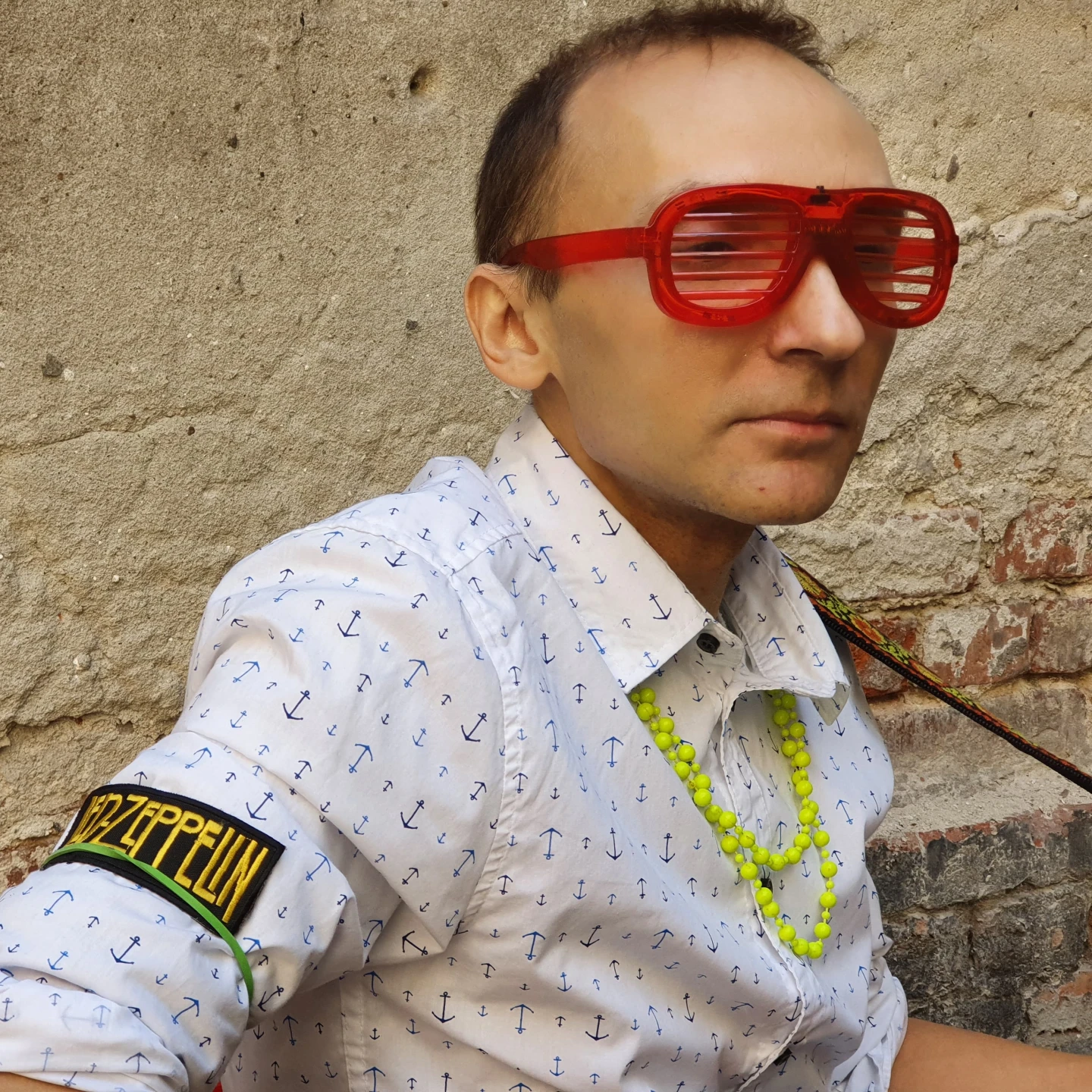
Creator of the Gondwana concept, music and production. He is also responsible for the structure of the extended version and the audiovisual layer of the project.
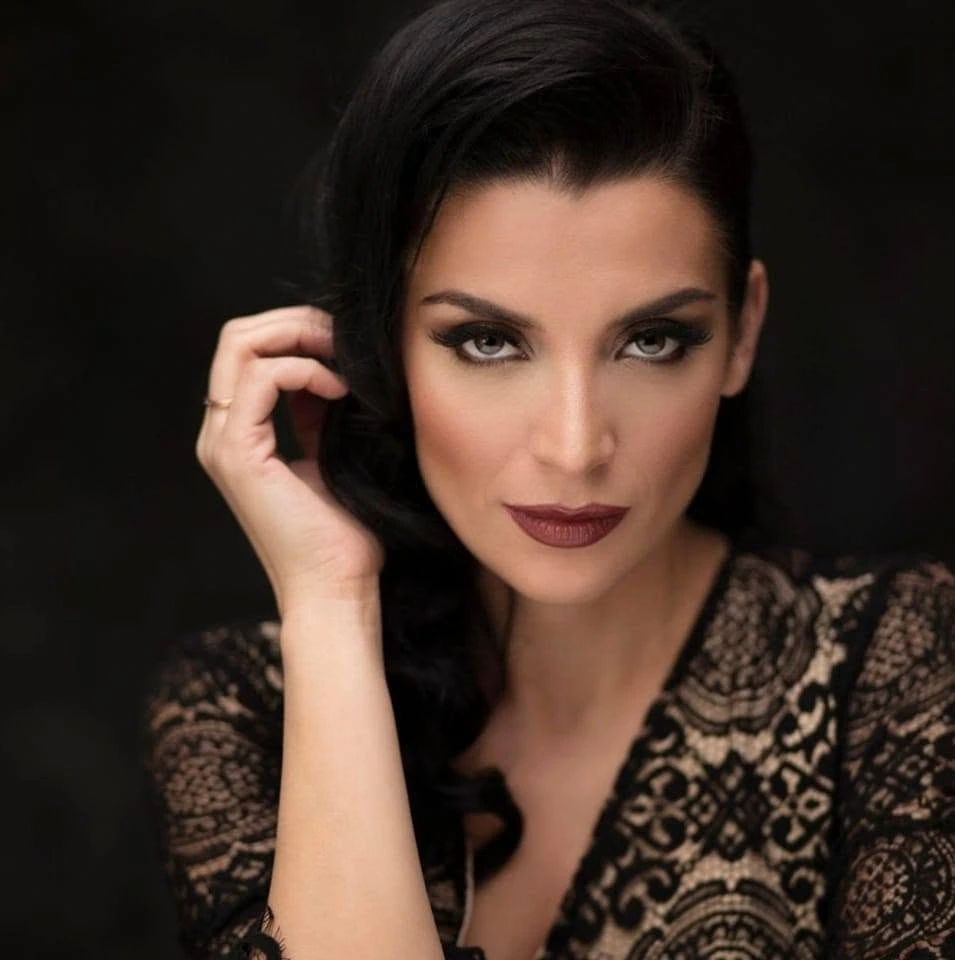
Guest vocalist responsible for the lyrics, vocal melody and vocal performance in the final section of the piece.
The project was created in Ableton Live on a MacBook Pro as a multitrack session combining Cort guitar, vocals, samples and sound design. Recordings were made through a Focusrite Scarlett audio interface, while mixing and monitoring were carried out on Kali Audio studio monitors. Selected audio materials from Pixabay were also used in the project.
The piece exists in two versions: basic and extended. Full listening links can be found on the HyperFollow page.
Four short visual fragments are being prepared for selected parts of the extended version. They will become part of the project page, and at the same time promotional materials for video formats: Reels, Shorts, and social media.
Darkness, noise, matter before form — the visual beginning of the journey.
Magma, rocks, tension, and the primordial violence of the planet.
Fire, caves, ritual, first signs, and ancestral voices.
The contemporary vocal section — the emotional centre of the project.